Interconnected smoke alarms: the Australian guide
Interconnected smoke alarms are linked so that when one detects smoke, every alarm in the home sounds. This site explains the rules in every state and territory, how the alarms work, what they cost, and how to install and look after them. Every rule links to the official source.
Queensland: 1 January 2027.
Every home must have interconnected photoelectric smoke alarms.
Do I need interconnected smoke alarms?
Queensland: yes, every home by 1 January 2027, photoelectric, in every bedroom, hallway and storey [qld.gov.au].
New homes anywhere in Australia: yes, mains powered and interconnected where there is more than one alarm [NCC 2025 Part 9.5].
Existing homes elsewhere: depends on the state and when the home was built, sold or leased. Every fire service recommends them [AFAC].
What are interconnected smoke alarms?
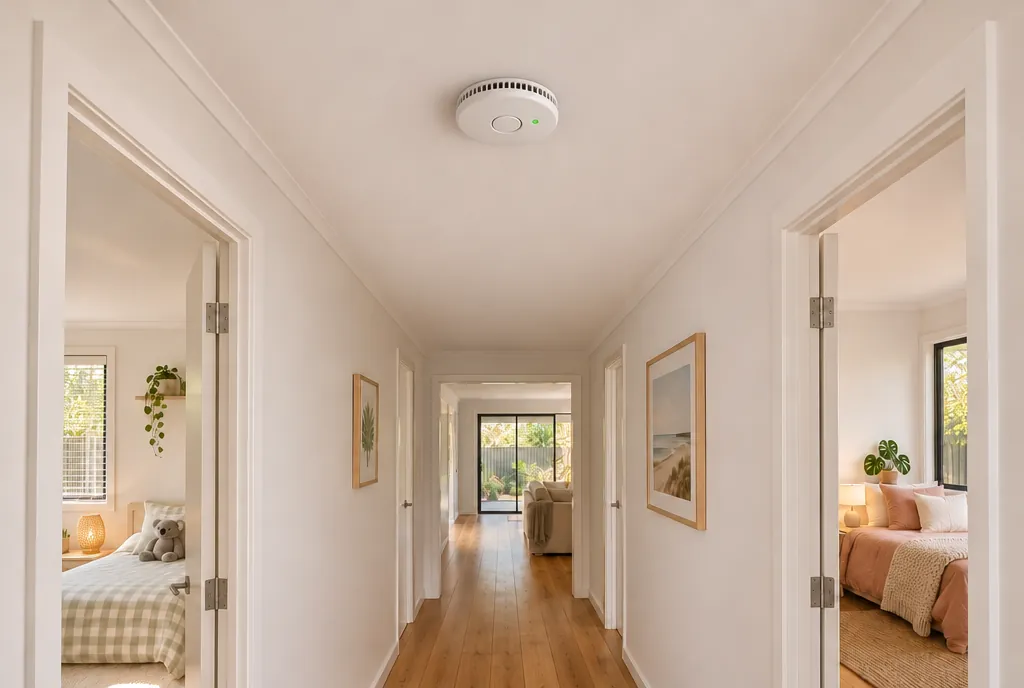
They are smoke alarms that talk to each other, by a wire in the ceiling or by radio. Queensland's law defines the idea neatly: each alarm sounds if another alarm's sensor detects smoke [Fire Services Act 1990 (Qld)]. The reason it matters is that a closed door blocks sound and smoke. Fire Rescue Victoria says "when a fire starts in a bedroom with doors closed, the smoke alarm outside the bedroom will not activate" [FRV]. Interconnected alarms in each bedroom fix that. Fire and Rescue NSW says the risk of dying in a home fire is halved if there is a working smoke alarm [FRNSW].
Halved
Start here
- Queensland 2027 deadlineWho it applies to, how to check your alarms, and a step-by-step plan.
- Wireless or hardwired?Cost, who can install them, and where wireless isn't allowed.
- What they costPrices seen on Australian retailer pages, November 2026.
- Alarms keep going off?Find the alarm that started it and fix the usual causes.
- Queensland smoke alarm deadline: 1 January 2027What changes on 1 January 2027, how to check your alarms and a step-by-step plan to comply.
- Smoke alarm laws in QueenslandThe full Queensland rules: alarm type, power, locations, distances, replacement, rentals, sales, penalties.
- Smoke alarm laws in New South WalesThe one-per-level rule, new build requirements, landlord duties and what Fire and Rescue NSW recommends.
- Smoke alarm laws in VictoriaRules by build date, the 2025 annual rental check, and what FRV and the CFA recommend.
- Smoke alarm laws in Western AustraliaThe sale, rental and hire triggers, the 10-year limit, the 2015 interconnection test and the fines.
- Smoke alarm laws in South AustraliaRegulation 95, the 6 month rule after a sale, interconnection from 2014 and the MFS advice.
- Smoke alarm laws in TasmaniaThe rental regulations, who tests, the large fines, and where TFS advice goes further than the law.
- Smoke alarm laws in the ACTThe rental law, the tenant battery rule, the 1994 hardwired date and ACT Fire & Rescue advice.
- Smoke alarm laws in the Northern TerritoryApproved photoelectric alarms, when old ionisation alarms must go, landlord and tenant duties, fines.
- Smoke alarms in new homes: what the National Construction Code requiresThe NCC 9.5 rules for new builds, why interconnection was added in 2014, and the current AS 3786 edition.
- Interconnected smoke alarms explainedWhat interconnected means, how wired and wireless links work, and where they are required by law.
- Wireless vs hardwired interconnected smoke alarmsCost, installation, legality and fire service advice for each, and how to mix them.
- Photoelectric vs ionisation smoke alarmsHow each sensor works, which fires each catches first, and where photoelectric is the law.
- 10-year lithium smoke alarms: how they work and when they are allowedSealed batteries explained, the state rules, the 10-year clock and the end-of-life chirp.
- Where to put smoke alarms, and how many you needLegal minimum locations by state, recommended spots, worked counts and the placement distances.
- Interconnected smoke alarm wiring explained (and why it is an electrician's job)Active, neutral and interconnect explained with a concept diagram, plus what to ask your electrician.
- Installing smoke alarms: DIY or electrician?What you can legally do yourself, what needs a licensed electrician, and a DIY install checklist.
- Smoke alarm installation cost in AustraliaPer-alarm and whole-house ranges from 2026 sources, what pushes quotes up, and how to save.
- How to upgrade an existing home to interconnected smoke alarmsFour common starting points, which need an electrician, and how to mix hardwired and wireless.
- Why do my interconnected smoke alarms keep going off?How to find the alarm that started it, and fix dust, insects, steam, cooking and wiring causes.
- Why is my smoke alarm chirping or beeping?What each chirp pattern means, why it keeps beeping after a battery change, and 10-year alarm end of life.
- How to test and clean interconnected smoke alarmsMonthly testing, checking every alarm joins in, cleaning intervals by state, and a yearly routine.
- Can you mix smoke alarm brands in an interconnected system?Why brands don't mix, what the makers say, and what to do about discontinued models.
- When to replace smoke alarms, and how to dispose of old onesThe 10-year rule, how to read the date, what to replace with, and disposal by state.
- Landlord smoke alarm obligations in every stateEvery state's landlord duties side by side: standard, testing, batteries, repairs and fines.
- Smoke alarms when you sell (or buy) a houseSale-triggered rules in QLD, WA, SA and the NT, and a seller's checklist.
- Smoke alarms for tenants: your rights and dutiesTenant duties by state, what to do when a landlord won't fix an alarm, and a move-in checklist.
How this site works
This is an independent guide written by Daniel Kilkelly. It is not a government site and is not affiliated with any fire service or smoke alarm brand. Every rule comes from an official page, listed at the bottom of each guide and on the sources page. It is general information, not legal or electrical advice. Read the editorial policy.
- IndependentNot a government site
- SourcedEvery rule links to the official source
- Last checkedNovember 2026
Sources
Every source below was read on the official page. Last checked: November 2026.
- Queensland Government (qld.gov.au): Smoke alarms (page last updated 29 October 2026)
- Queensland Legislation: Fire Services Act 1990, Part 9A, ss 147W to 148K (PDF, current as at 6 December 2025)
- Fire Rescue Victoria: Smoke alarms (page updated 9 September 2026)
- AFAC (National Council for fire and emergency services): Smoke alarms in domestic and residential accommodation, guideline v4.0 (October 2023)
- Fire and Rescue NSW: Smoke alarms
- Australian Building Codes Board: NCC 2025 Housing Provisions Part 9.5 Smoke alarms and evacuation lighting